The grand ballroom chandeliers glittered above white-gloved hands holding champagne flutes when designer Marco Visconti first noticed the sartorial disconnect. "There was this beautiful woman in couture Dior with opera-length kidskin gloves," he recalls, "and outside, protesters were wearing neon rubber cleaning gloves as makeshift pandemic gear." This striking juxtaposition sparked what fashion historians now call the Great Glove Reclamation - a movement blurring boundaries between formalwear and functional hand coverings.
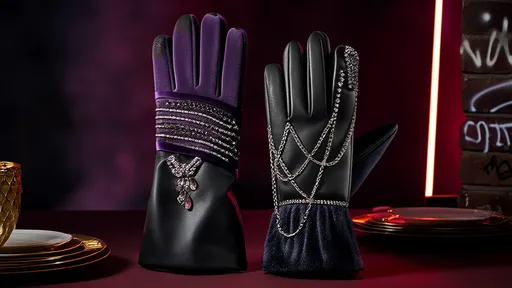
Visconti's subsequent "Black Tie & Bleach" collection sent shockwaves through Milan Fashion Week last autumn. Models strutted down the runway wearing elbow-length gloves crafted from unexpected materials: one pair woven from industrial-grade silicone with delicate pearl beading, another made of quilted Kevlar stitched with gold thread. "Suddenly everyone realized gloves weren't just about etiquette or protection," notes Vogue's accessories editor. "They became this radical canvas for cultural commentary."
The trend quickly escaped haute couture ateliers. In London's Camden Market, vintage dealers report surging demand for 1980s punk fingerless gloves alongside Edwardian lace mitts. A Brooklyn-based collective called Hand Occupation began hosting "stitch-ins" where participants graft motorcycle armor plating onto cashmere gloves. Meanwhile, Tokyo street style blogs feature teens layering transparent vinyl food service gloves under antique kimono sleeves.
Material innovation drives much of this revolution. Swiss textile lab Scholler recently developed a temperature-regulating membrane thinner than human skin that's being adapted for both surgical gloves and evening wear. "Our nanotechnology allows perspiration evaporation while maintaining opacity," explains lead researcher Dr. Elsa Werner. Luxury brands have already licensed the material, while outdoor retailers plan ruggedized versions for alpine climbers.
Historical parallels abound. Glove historian Beatrice Morrison points to 16th-century Venetian courtesans who wore perfumed leather gloves as status symbols, while laborers in the same city used tar-coated mitts for shipbuilding. "What's different now," she observes, "is the deliberate collision of these worlds." Contemporary designers intentionally distress materials - acid-washing satin until it resembles construction worker grips or embedding steel wool filaments in silk.
The pandemic's legacy lingers in unexpected ways. Those ubiquitous blue nitrile gloves have inspired high-fashion interpretations in iridescent finishes, while medical-grade neoprene now appears in avant-garde collections. "COVID made gloves emotionally charged," says psychoanalyst-turned-fashion consultant David Feld. "We're simultaneously drawn to their protective symbolism and desperate to reclaim them as objects of pleasure rather than fear."
Practical considerations haven't disappeared. Fire-resistant gloves with Swarovski crystal accents now grace the hands of welder-artists in Detroit studios. Ballet dancers increasingly wear carbon fiber-reinforced rehearsal gloves that later appear, slightly scuffed, at gala performances. This duality delights sustainability advocates. "When a single pair serves multiple contexts, it defeats fast fashion cycles," remarks EcoStyle editor Priya Kapoor.
Perhaps the most surprising development emerges from tech integration. Startups like HaptiGlove are weaving conductive threads into driving gloves that vibrate with GPS directions, while heritage brand Chester Jeffries offers made-to-order fox fur gloves with discreet smartphone-compatible fingertips. The convergence raises philosophical questions about what gloves mean in an increasingly touchless world.
From Parisian ateliers to Baltimore skate parks, gloves are undergoing an identity crisis - or perhaps a renaissance. As Visconti muses while examining a prototype glove made from upcycled airbags and Chantilly lace: "They're no longer just something you put on your hands. They're what you want the world to hand you." The sentiment echoes through fashion's current glove obsession, where every stitch carries layers of meaning waiting to be unraveled.

By /Aug 1, 2025
By /Aug 1, 2025

By /Aug 1, 2025

By /Aug 1, 2025

By /Aug 1, 2025

By /Aug 1, 2025

By /Aug 1, 2025

By /Aug 1, 2025
By /Aug 1, 2025

By /Aug 1, 2025

By /Aug 1, 2025
By /Aug 1, 2025

By /Aug 1, 2025

By /Aug 1, 2025

By /Aug 1, 2025

By /Aug 1, 2025
By /Aug 1, 2025
By /Aug 1, 2025
By /Aug 1, 2025

By /Aug 1, 2025
