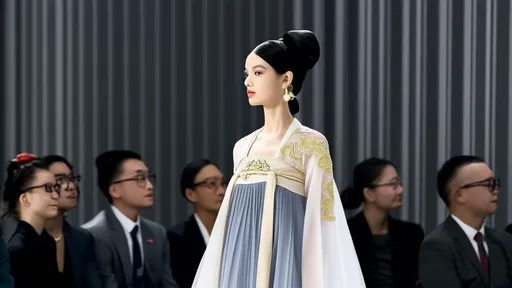
The global fashion landscape has witnessed a quiet revolution over the past decade, as Eastern aesthetics gradually weave their way into Western-dominated runways. Among these influences, Hanfu elements—rooted in China’s Han dynasty traditions—have emerged as a distinctive cultural force. Unlike the fleeting trends of fast fashion, Hanfu’s integration into international collections reflects a deeper dialogue between heritage and modernity, one that resonates with designers and audiences alike.
At the heart of this movement lies a delicate balance. Designers who incorporate Hanfu-inspired details—wide sleeves, intricate embroidery, or flowing silhouettes—often face the challenge of honoring tradition while avoiding caricature. The success of these adaptations hinges on cultural fluency. For instance, Guo Pei’s 2015 Met Gala showcase for Rihanna, featuring a voluminous yellow gown with dragon motifs, sparked global fascination. Yet, it also ignited debates about authenticity versus spectacle. This tension underscores a broader question: How does Hanfu translate beyond its historical context without losing its soul?
The reception among international audiences reveals fascinating nuances. In Europe, where haute couture traditions run deep, Hanfu elements are frequently reinterpreted through a minimalist lens. Brands like Louis Vuitton and Dior have experimented with mandarin collars and asymmetrical closures, pairing them with contemporary fabrics. Meanwhile, younger consumers in North America, particularly those engaged with cosplay and anime subcultures, embrace Hanfu’s dramatic proportions as wearable art. Social media platforms like TikTok have amplified this crossover, with #Hanfu amassing over 800 million views—a testament to its viral appeal beyond academic circles.
Critics argue that some Western interpretations risk diluting Hanfu’s cultural significance into mere exotic flourishes. The 2023 controversy surrounding a Milanese designer’s "reimagined" Hanfu collection—which replaced traditional silk with PVC—highlighted ongoing sensitivities. However, collaborative efforts suggest a path forward. Recent partnerships between Chinese textile artisans and Parisian ateliers have produced hybrid pieces that maintain technical integrity while pushing creative boundaries. These projects demonstrate that mutual respect, rather than appropriation, can yield groundbreaking work.
Market data reveals surprising economic implications. According to the 2024 Global Fashion Census, garments incorporating Hanfu elements commanded a 17% price premium over comparable designs in luxury segments. This premium reflects not just novelty, but perceived craftsmanship value. Interestingly, demand skews heavily toward limited-edition pieces rather than mass-produced items—a nod to Hanfu’s artisanal roots in an age of automation.
What makes Hanfu’s crossover particularly compelling is its timing. As the fashion industry grapples with sustainability crises, Hanfu’s emphasis on natural dyes, zero-waste cutting techniques, and durable fabrics aligns with growing consumer consciousness. The "slow fashion" philosophy embedded in traditional Hanfu construction offers an implicit critique of disposable trends. This ecological dimension adds unexpected relevance to its ancient techniques, positioning them as solutions rather than relics.
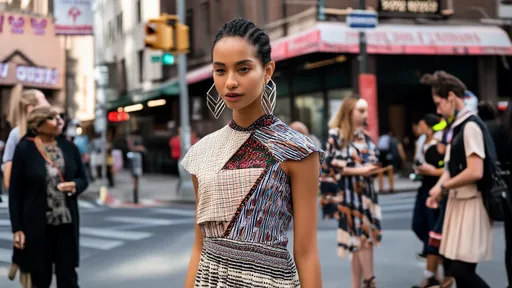
The runway, however, is just one frontier. Street style adaptations in cosmopolitan hubs like London and Shanghai reveal how Hanfu elements organically mutate in daily wear. A silk brocade vest layered over jeans here, a hairpin repurposed as a brooch there—these micro-innovations suggest that cultural exchange thrives most vividly outside institutional frameworks. They also hint at a generational shift: for global youth, mixing cultural references isn’t political—it’s instinctive.
Looking ahead, the evolution of Hanfu’s international presence will likely hinge on education. As museums mount exhibitions tracing its 4,000-year history and universities incorporate textile conservation programs, appreciation moves beyond surface aesthetics. When a New York designer understands why certain motifs were reserved for imperial courts or how color gradations signify regional identities, the resulting designs carry weight. This knowledge transforms inspiration from mimicry to meaningful exchange.
Ultimately, Hanfu’s journey mirrors larger cultural currents. In an era of heightened nationalism, its ability to bridge divides—through shared appreciation of beauty—feels quietly radical. The garments may change, but the conversation they spark about identity, heritage, and creativity remains timeless. As one Beijing-based curator remarked, "The best cultural exports don’t demand attention; they earn curiosity." On that measure, Hanfu’s unfolding global chapter has only just begun.
By /Aug 1, 2025
By /Aug 1, 2025

By /Aug 1, 2025

By /Aug 1, 2025
By /Aug 1, 2025
By /Aug 1, 2025

By /Aug 1, 2025
By /Aug 1, 2025
By /Aug 1, 2025

By /Aug 1, 2025
By /Aug 1, 2025
By /Aug 1, 2025

By /Aug 1, 2025

By /Aug 1, 2025

By /Aug 1, 2025

By /Aug 1, 2025
By /Aug 1, 2025
By /Aug 1, 2025
By /Aug 1, 2025
By /Aug 1, 2025
